Stories from the Unknown: How to Embrace Fear as a
Faithful Companion (2025)
Stories from the Unknown begins at the edge of what you think you know. It’s that quiet moment before you step forward — when every instinct tells you to wait, but something deeper whispers, go anyway. Fear often greets you here, not as punishment, but as presence. It doesn’t block the path; it marks the threshold. The body feels it before the mind understands — that tightening, that quick breath — as if the earth itself were asking: Are you ready to meet what’s real?
We learn to fear fear because we mistake it for danger. Yet fear is not the enemy; it is the body’s way of remembering safety. It reminds you that you are alive, awake, and standing on the edge of growth. Beneath its noise lies guidance — a compass pointing to where you are meant to stretch. When you stop fighting the feeling and start listening, you realise fear doesn’t chase you away from life; it calls you deeper into it.
The unknown will never promise certainty. But it offers something better — presence. Each time you walk forward despite trembling, you begin to trust that movement itself is a kind of wisdom. The seeker learns that courage isn’t the absence of fear; it’s the decision to carry it gently. To let it walk beside you, whispering reminders that you are not lost — just crossing into new ground.
The Nature of Fear: The Body’s Way of Remembering Safety
Fear is not a flaw. It is a signal — an old language of the body, spoken long before thought learned how to interrupt. When fear rises, it is not trying to ruin you; it’s trying to reach you. It says, something here matters. The pulse quickens, the breath shortens, the senses sharpen — not to harm you, but to keep you aware. Fear is life reminding you to pay attention.
Some fears protect; others repeat. The body doesn’t always know the difference. It stores memories, unprocessed echoes of what once hurt. When a situation feels familiar, the same alarm rings, even if there’s no real danger. That’s why awareness is so essential: it separates the fear that warns you from the fear that merely remembers. The task isn’t to erase fear, but to understand what it’s trying to tell you.
Most people meet fear like a wall. They tense, push harder, try to outthink it. But the seeker learns that fear softens when it’s acknowledged. When you pause — breathe, notice, name — the body begins to recognise that it is safe enough to stay. Fear transforms not through control, but through contact. Each time you face it without running, the nervous system relearns calm.
Courage, then, is not built in the absence of fear. It grows through relationship with it. The moment you stop labelling fear as failure, you reclaim your power to listen. You notice where it lives — in the throat, in the stomach, in the air between heartbeats — and you begin to speak its language. I see you. I hear you. We can walk together.
Fear becomes less of a threat and more of a threshold. A signal that something meaningful waits beyond resistance. It’s not about mastering fear, but remembering what it’s trying to protect — your aliveness, your awareness, your next step.

Where the journey leads
A path unfolds before you
Beyond each step, the path opens further.
Continue your way and let it guide you home.
Walking with Fear: Turning the Unknown into a Teacher
Fear softens when it’s met, not managed. The unknown stops being an enemy the moment you choose to walk through it instead of around it. Like the body adjusting to cold water, the first touch shocks — but if you stay, something in you begins to breathe differently. That’s the shift: fear doesn’t disappear; it changes its texture. It becomes less a wall and more a wind, sometimes strong, sometimes gentle, always teaching you how to move with what is.
- Name the feeling, not the story: When fear rises, describe the raw sensation — the tightness in the chest, the tremor behind thought, the way breath stumbles. Naming anchors you in the body instead of the spiral of explanations.
- Stay curious longer than you stay certain: Curiosity interrupts panic. It invites the mind to look again, to widen its frame, to consider that not knowing might also mean discovering. Uncertainty becomes less of a threat when it’s treated as a doorway.
- Move, gently.: Walk, stretch, hum, touch the ground. The body processes what the mind cannot. Movement tells fear that life continues, that stillness is a choice — not a trap.
These gestures may seem small, but practiced with care they shift entire landscapes within you. Fear is only unbearable when it feels endless, but when you move with it, it becomes motion again — a tide that ebbs and flows, reminding you that rhythm is still possible even inside tension. The seeker learns to meet the unknown like weather: something to feel, not to fight. You stop asking for clear skies and start trusting your capacity to travel through storms.
Each time you breathe through what frightens you, the world expands by a fraction. You begin to trust not because you predict the path, but because you remember you can walk it. Fear becomes a teacher, not through theory but through experience — each tremor an invitation to re-enter life.
And perhaps fear’s greatest gift is humility. It brings you back to the ground, to the pulse beneath ambition, to the steady rhythm that says: even now, you are safe enough to stay. To walk with fear is to walk with life itself — uncertain, trembling, but entirely alive.
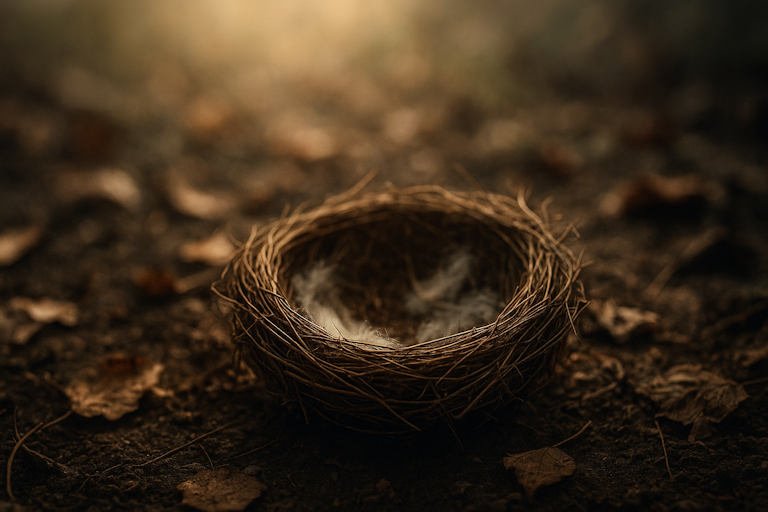
Fear is not the ground breaking beneath you.
It is the soil reminding you that even trembling roots can hold.
What if fear was simply the earth asking you to trust its strength again?
Tyra, from the Realm of Ardenor
Roots Beneath the Storm: Trusting What Holds You
When the storm comes, the body remembers what it means to brace. Muscles tighten, breath shortens, the mind begins to count exits. Yet what truly steadies you is never above the surface — it’s what lives beneath. Roots do not flee the wind; they listen to it. They hold, not because they are stronger than the storm, but because they remember the rhythm of the ground that formed them.
We often meet fear as something to rise above, to outsmart, to silence. But the earth teaches otherwise. Courage is not the absence of trembling; it is the willingness to stay connected while you tremble. The ground holds even when the surface shakes. The seed doesn’t survive because it resists the rain, but because it surrenders to it. To trust what holds you is to lean back into life itself — to remember that safety is not a fortress, but a rhythm that begins with breath.
Not every fear means danger. Some are invitations in disguise, asking you to grow beyond what was once safe. The seeker learns to pause and listen before reacting: is this fear protecting me, or preparing me? True danger contracts the body; growth, even when uncomfortable, keeps a pulse of aliveness. Fear that points toward growth often feels electric, spacious, uncertain — a signal that something new is unfolding. When you meet that kind of fear with curiosity instead of control, it begins to loosen its grip and reveal its message.
The storms that shape us rarely ask permission. They come to rearrange what has outlived its form. Each gust strips away the false supports we’ve leaned on and exposes what is genuinely rooted. If you breathe through the shaking, you’ll feel the steadier rhythm beneath — the slow pulse of the earth reminding you that movement doesn’t always mean collapse. Some things bend so they can survive.
To trust the ground is to trust life’s deeper intelligence — that what falls away is not punishment, but pruning. The seeker who learns this no longer fears the trembling; they listen to it. The storm teaches resilience, but the roots teach remembrance: even now, beneath the noise, you are held by something that does not leave.
The Companion of Courage
Fear will always walk beside you — not as an intruder, but as a reminder that you are alive. It appears at every threshold, tracing the outline of the unknown before you cross. But when you stop running from it, fear begins to change shape. It becomes quieter, slower, something almost tender. You start to sense that its purpose was never to stop you, only to steady you.
Courage is not a state you reach; it’s a relationship you build. Every time you breathe into what frightens you, you teach your body that safety can exist inside uncertainty. Fear and trust become companions, each keeping the other honest. Together they form the rhythm that carries you forward — the heartbeat of every seeker who dares to meet life as it is.
In the end, fear does not disappear. It learns your pace. It walks a little behind you, no longer pulling, no longer pushing — just moving with you, step by grounded step. And somewhere along that quiet path, you realise: what once felt like an enemy has become your oldest ally, guiding you home to your own strength.
Where the journey leads
A path unfolds before you
Beyond each step, the path opens further.
Continue your way and let it guide you home.