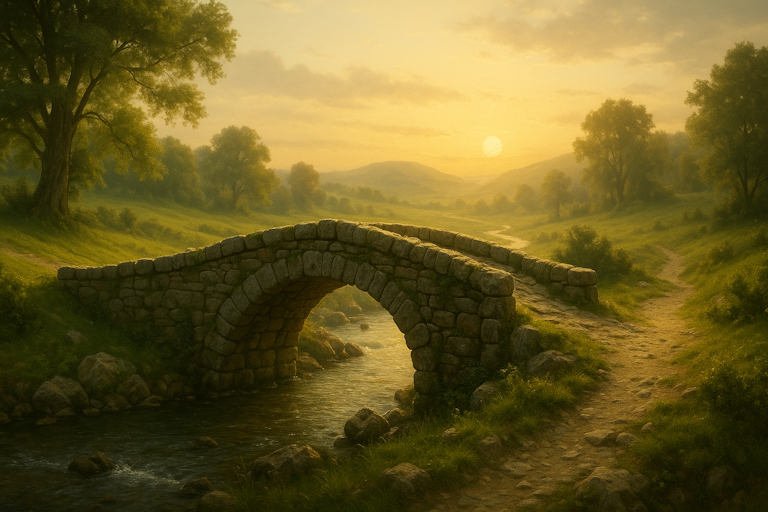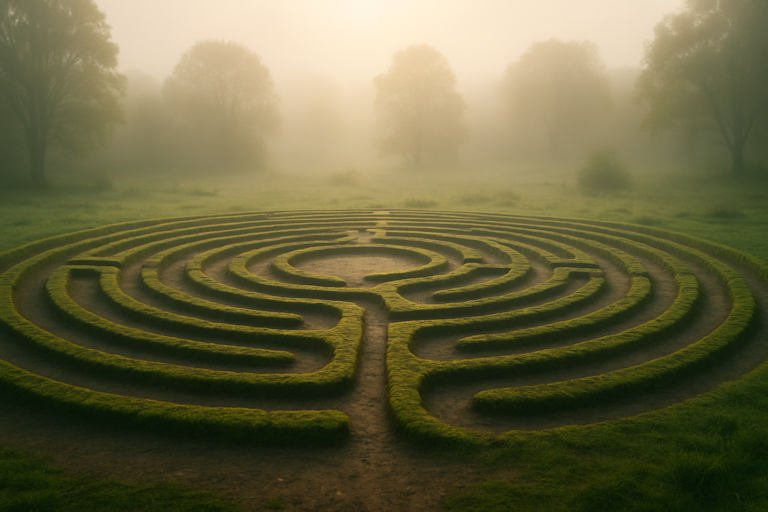
Where Your Feet Touch the Earth: Finding Direction in Uncertain Times (2025)
Finding direction rarely begins with a grand decision. More often, it starts in a quieter place — that subtle moment when your feet meet the ground and something in you recognizes the need to pause. Not because you know where to go next, but because you feel you can’t keep moving the way you have. Uncertainty has a way of blurring the horizon until every path looks the same. And yet, beneath all that fog, the earth is still there, steady and patient, asking you to feel where you stand before you decide where to step.
In uncertain times, the mind wants clarity before movement. It wants guarantees, maps, signs, a sense of safety that feels absolute. But life rarely offers that kind of certainty. Instead, it offers something quieter: contact. The press of your feet into soil. The weight of your body resting on something that does not shift. Direction doesn’t always come from knowing; sometimes it comes from sensing. The earth beneath you becomes an anchor — not to hold you still, but to remind you that you are capable of standing even when the future feels unclear.
And it’s often in this slowing, in this grounded noticing, that a new truth begins to form. Not a revelation, not a dramatic turning point, but a faint pull — a soft awareness that you don’t need the whole path to begin. Just one honest step. One moment of connection. One point where your body whispers what your mind has been too overwhelmed to hear. When life feels uncertain, the earth invites you back to something simple: you find your way not by forcing clarity, but by returning to where your feet already are.
Finding direction when the future feels unclear
Finding direction is often most difficult at the very moment you need it most. When life feels uncertain, the mind instinctively searches for answers — for a map, a sign, a clear next step that promises safety. But uncertainty has a way of blurring everything at once. The more you try to see ahead, the more the horizon dissolves. It can feel as if every path is both possible and impossible at the same time, leaving you suspended between movement and hesitation.
People often describe this as feeling “lost,” yet the experience is rarely about not knowing where you want to go. More often, it’s about not recognizing where you’re standing. When stress rises or the world shifts around you, your inner ground can feel unsteady. Even small decisions begin to feel heavy because they seem to carry the weight of the entire future. The mind wants direction to feel certain, definitive, immune to change — but life doesn’t offer that kind of clarity. What it offers instead is something quieter: the chance to slow down long enough to feel what is true right now.
This is why making choices in uncertain times can feel almost impossible. You’re not just choosing between options — you’re choosing between potential versions of yourself, potential futures you cannot yet see. The pressure to “get it right” becomes so strong that even stillness feels risky. But stillness is not stagnation. It’s the moment the noise settles enough for you to hear what has been speaking under the surface all along. Often, direction isn’t found in the mind’s attempts to analyze the future, but in the body’s response to where you are now.
And so the first step is rarely forward. It is downward — a soft return to the ground beneath your feet. Before you know which way to go, you need to feel where you are: the honesty of the present moment, the weight of your own breath, the contact between your body and the earth. These small, grounded truths don’t give you the entire path, but they give you something far more valuable: a beginning point. A place from which movement becomes possible again. Direction doesn’t always appear in clarity; sometimes it appears in presence.

Where the journey leads
A path unfolds before you
Beyond each step, the path opens further.
Continue your way and let it guide you home.
The wisdom of the earth beneath you
There is a quiet intelligence in the ground beneath your feet — a kind that doesn’t rush, doesn’t push, doesn’t demand that you decide before you’re ready. The earth teaches direction differently than the mind does. Where the mind seeks clarity through certainty, the earth offers clarity through contact. It asks you to slow down long enough to feel the truth of where you stand. In uncertain times, this grounded sensing becomes its own kind of compass: not one that points outward, but one that reveals what’s steady inside you.
People often imagine direction as something they must find “out there,” something waiting on the horizon. But before any forward path appears, the earth invites you into a different kind of knowing — one that rises from stability, from presence, from the simple act of feeling held by something that does not move. The ground beneath you may not speak in answers, but it speaks in reassurance, and sometimes that reassurance is what allows your inner compass to turn again.
In Monte Pelica, the earth has always been a symbol of quiet guidance: not loud, not dramatic, but patient in its offering. It reminds you that even when the future feels unclear, there are truths that do not vanish. Your body knows them. Your breath knows them. The soil beneath you knows them. And when you let that steadiness reach you, small directions begin to surface — not as decisions, but as recognitions.
You feel this wisdom most clearly in three subtle ways:
- The ground shows you where you’re carrying too much: When you pause long enough to feel your weight, you notice what feels heavy, strained, or unbalanced — truths the mind often overlooks in motion.
- The earth reveals what still holds you: Even when everything around you shifts, there is always one moment of contact that remains steady. That steadiness becomes the anchor from which clarity begins to rise.
- Presence becomes a form of orientation: Before you know where to go, you begin to sense what direction feels honest — not because you’ve analyzed your path, but because you’ve reconnected with the part of you that recognizes truth by feel.
Direction rarely arrives as a sign or a sudden certainty. More often, it emerges the moment you stop searching and start listening — to your breath, your weight, your body’s quiet conversation with the earth. In that grounded exchange, the first hints of a path begin to appear.
Uncertainty loosens the horizon, but not the ground beneath you.
Your next step begins where your weight is honest.
What part of your footing feels real right now?
Tyra, from the Realm of Ardenor
When the path reveals itself step by step
There is a moment in every journey when the mind demands clarity but the world offers only quiet. You look ahead and see nothing solid, nothing guaranteed, nothing that promises you won’t choose wrong. And yet, something small inside you keeps insisting that forward movement is still possible — not because you can see the whole path, but because something in you refuses to stay frozen. In uncertain times, this is often how direction returns: not as certainty, but as a shift in your relationship with the next step.
People often ask how to move forward when the future feels unclear, as though the answer were hidden somewhere far ahead. But paths rarely reveal themselves in full. Most of the time, they appear only as you step — one curve at a time, one turn at a time, one quiet recognition at a time. The mind wants a destination; the body wants contact. And the earth beneath your feet offers something even deeper: the assurance that movement does not require a perfect map. It requires presence, willingness, and the courage to trust what you feel beneath you.
This is why grounding matters more than most people realize. When life becomes unstable, the instinct is to speed up, to analyze more, to push through the fog with force. But the more you strain for clarity, the further it seems to drift. Grounding does not give you answers; it gives you orientation. It steadies your breath, slows your pace, and lets your inner compass turn again. Clarity grows from steadiness — not the other way around.
And in that steadiness, a subtle truth becomes visible: you do not need to know the entire way forward to begin moving again. Direction often returns the moment you stop trying to predict what every step will lead to. It returns when you feel the earth hold your weight, when you breathe deeply enough to sense what feels honest, when you admit that the future doesn’t have to be known to be entered.
Paths in uncertain times are not linear. They bend, shift, disappear, reappear. But they are still paths. They are revealed not by force, but by rhythm — your rhythm. With each small step, the world shifts just enough for the next one to appear. Not clearly, not confidently, but truthfully. And sometimes, that is enough to begin.
Where your direction quietly returns
In the end, direction rarely arrives as a sudden revelation. It returns in the smallest, most grounded moments — when your breath steadies, when your feet touch the earth, when you stop demanding certainty long enough to feel what’s real beneath you. Uncertain times make the future hard to see, but they don’t erase your ability to sense the next step. They simply invite you to shift how you listen.
The earth doesn’t ask you to be fearless or confident. It doesn’t ask you to know the outcome before you begin. It asks only that you arrive — with your weight, your honesty, your willingness to stand where you are. From that place, direction grows almost naturally. Not in leaps, not in final answers, but in quiet recognitions that guide you one step at a time.
Maybe that’s the deeper truth: your path is not something waiting far ahead. It unfolds from the ground beneath you, rising as you move, shaping itself around your presence. And when you let yourself meet the earth again — with patience, with openness, with steadiness — you find that the first hint of direction has been with you all along.
Where the journey leads
A path unfolds before you
Beyond each step, the path opens further.
Continue your way and let it guide you home.