Guided Visualizations You Can Do Anywhere (2025)
You don’t need silence to find calm. You only need a pause — a breath, a moment, an image that feels like water touching the edges of your thoughts. Guided visualizations are not about escaping reality; they’re about softening it. They teach you how to let the mind drift just enough to see beyond its own ripples. Whether you’re on a bus, in a crowded office, or lying awake at night, a few quiet seconds of imagination can open space where tension once lived.
Your mind is not a machine that must be switched off to rest; it’s a landscape that responds to attention. When you invite an image — a place, a color, a movement — your body follows. Breath deepens, shoulders drop, heartbeat slows. What was chaos begins to organize itself into rhythm. This is the beauty of guided visualization: it asks so little, yet offers so much. A single picture held with care can become a whole tide of calm.
You don’t have to close your eyes or wait for the perfect setting. The practice is portable — it travels with you like memory, like light. Wherever you are, you can return. You can imagine sunlight spilling over water, or a steady breeze that clears the air around you. The world doesn’t have to change for you to breathe easier; only your focus does. And the more you practice, the more you’ll remember: peace was never lost — it was just waiting for your attention to come home.
What Guided Visualizations Really Are
Guided visualizations are simple stories told to the body through the language of the mind. They don’t require deep concentration or mystical talent — only willingness. Each image becomes a gentle suggestion, a way of reminding your nervous system that safety is possible. When you imagine warmth, your body responds. When you picture stillness, your breath follows. The brain doesn’t easily distinguish between what it sees and what it imagines; that is why a few quiet moments can feel like an entire journey home.
In a world that pulls us outward, visualization brings us inward — not to hide, but to restore rhythm. It allows you to step for a moment into a softer scene, to give your thoughts somewhere kind to land. The more vividly you imagine, the more your body listens. Muscles release, heart rate steadies, and that low hum of tension that so often lingers in the background begins to dissolve. It isn’t magic. It’s biology made gentle.
Stress thrives on repetition — the same worries circling, the same muscles tightening. Visualization interrupts that loop by offering new patterns, new images, new breaths. A mind that has been running can only rest when it has something calm to follow. So we offer it something simple: a color, a movement, a sound. The moment you picture light expanding through your chest, your body begins to remember what openness feels like.
What makes guided visualizations so powerful is their accessibility. You don’t need candles or music or silence. You only need presence. Even thirty seconds of mindful imagery can shift your internal weather. Over time, these moments build a memory of peace — a quiet reservoir you can return to whenever the noise grows too loud. Visualization doesn’t replace life; it refines how you experience it. It reminds you that peace is not found by leaving the moment, but by softening within it.
When Readiness Appears
You do not start because everything is clear.
You start because something no longer fits.
That quiet recognition is often enough.

Creating Calm in Everyday Spaces
Peace doesn’t always arrive in silence. Sometimes it meets you in the middle of movement — on the train, in a busy kitchen, or between one task and the next. Guided visualizations can live anywhere because calm is not a place; it’s a pulse you can touch from within. The mind is remarkably willing to soften when you give it a picture gentle enough to rest in. All it takes is a few breaths and a little attention.
Try these simple visualizations you can do anywhere:
- The Window Breath: Imagine that every exhale opens a window inside you. With each breath out, fresh air moves through, clearing what feels heavy. The body expands as if filled with light wind.
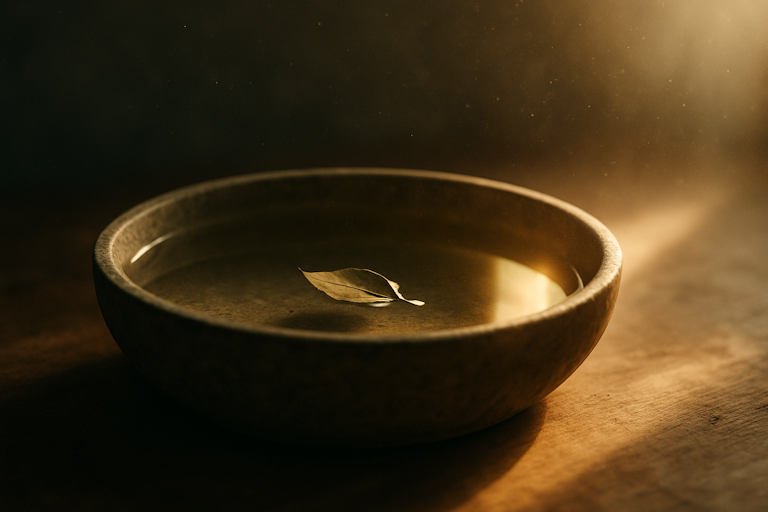
- The Floating Leaf: Picture a single leaf drifting across calm water. Watch how it moves — slow, steady, unbothered by current. Let your thoughts follow its rhythm until your mind floats beside it.
- The Gentle Tide: Feel a wave rising through you with each inhale, then falling softly with each exhale. The wave doesn’t rush; it simply moves. The body begins to remember flow.
Each of these images works because the body responds to imagination as though it were touch. The nervous system listens to pictures, not only to words. When you imagine something calm, your body doesn’t ask if it’s real — it simply begins to mirror it. That is why these small rituals can be powerful in the middle of ordinary life.
You can practice them standing, sitting, or even walking. No special posture, no perfect focus — just a willingness to pause and notice. The aim isn’t to erase stress but to remind the body that another rhythm exists. When practiced often, these moments begin to layer like ripples, one calm leading into another. And gradually, the mind learns to return there without being told.
Calm is not something you find; it’s something you practice noticing. And the more you notice, the closer it always seems to be.
The Practice of Return
There is a quiet kind of strength in choosing to pause, even when everything around you keeps moving. Most people wait for calm to arrive before they breathe more slowly, but visualization works the other way around: you bring the calm to yourself. By returning to one image, one rhythm, the body begins to recognize the path — as if something inside says, oh, this place again… I know how to settle here. With repetition, the path becomes softer and easier to follow.

There is a shore within me
where the waves always soften.
May I find it again and again,
no matter where I stand.
Elara, from the Realm of Maralis
This practice is never about perfection. Some days the images appear vivid and bright; other days they drift at the edges of your awareness like waves you can almost hear but not quite reach. That is part of the rhythm. Every attempt matters — even the imperfect ones. Your body doesn’t require intensity; it only needs the reminder that for a moment, you slowed down, listened, and didn’t let the day carry you away. Over time, these small returns begin to shift your inner baseline.
With each return, something subtle changes. Not dramatically, but in quiet corrections you only notice when you look back. Perhaps a thought settles faster than it used to. Perhaps a single breath drops deeper without effort. Or perhaps you find that one familiar image more quickly when stress rises. What once required intention slowly becomes instinct — a soft habit that carries itself.
And that is the beauty of guided visualizations practiced anywhere: they become portable rituals. Lighter than meditation, gentler than structured breathwork, yet surprisingly powerful because they fit into the small folds of your day. You don’t have to stop your life to use them; you simply add a moment of softness. An image. A direction. A small wave of presence moving through you. Over time, it feels less like a technique and more like coming home.
As you practice, you begin to build an inner landscape — a place shaped by images, breath, and familiarity — and this landscape travels with you. No matter where you are, there is always a doorway back to ease. That is the quiet gift of these rituals: calm becomes something you carry, not something you chase.
The Water You Carry With You
The more you practice returning to these small moments of imagery, the more you begin to understand: calm was never something outside of you. It was never tied to a room, a ritual, or the rare quiet hours you hoped to find. It lives in the simple act of choosing a softer rhythm, even when the world moves quickly around you.
Guided visualizations don’t ask for time — they offer it. Each image slows the day just enough for the breath to catch up, for the mind to loosen, for the body to remember what ease feels like. Over time, these small returns become a kind of inner tide. They rise when you need them, fall when you release, and leave behind a steadiness you didn’t know you were building.
You don’t have to wait for silence. You don’t have to wait for perfect conditions. The calm you seek travels with you — in your breath, in your attention, in the gentle images you carry like small pockets of light. Wherever you go, there is always a way back to yourself. And every return, no matter how small, is enough.
When Readiness Appears
You do not start because everything is clear.
You start because something no longer fits.
That quiet recognition is often enough.