
The Power Of Saying No: When The First Step Home Begins (2025)
The power of saying no is often underestimated. A single word, so short, can feel impossibly heavy. For many, it carries echoes of guilt, the fear of letting others down, or the habit of always keeping the peace. Yet behind that weight lies something essential: every no you speak also carries a hidden yes.
To say no is not rejection, and it is not selfishness. It is a return. Boundaries are not walls to shut people out; they are the shape of your inner home. Without them, you are constantly stepping outside yourself. With them, you begin to reclaim your own ground.
This is rarely an easy journey. At first, no may sound shaky, unfamiliar. It may stir resistance in others, or doubt within yourself. But slowly, the power of saying no begins to change shape: less like a battle, more like a first step home. And that is where this path begins.
Why the power of saying no feels so hard
The power of saying no sounds simple, yet living it is another story. From an early age, many of us are taught that approval is earned by saying yes. We learn that kindness means being available, that peace is kept by avoiding conflict, and that belonging requires us to bend. No wonder a small word can feel like a risk.
Part of the difficulty lies in how much we fear disappointing others. A “no” might upset a colleague, unsettle a friend, or bring tension at home. The discomfort of facing that reaction often feels heavier than the quiet exhaustion we carry when we keep saying yes. So we nod, we agree, and we stretch ourselves thinner.
There is also the voice within. The one that whispers you are selfish if you decline, unkind if you step back, lazy if you rest. Even when your body signals fatigue, the mind replays old rules: don’t let them down, try harder, be a good person. Saying no isn’t just one word — it feels like breaking a lifelong contract.
Modern life adds to the weight. Workplaces reward those who are always available. Social media praises constant presence. The cultural script suggests that every yes opens doors and every no closes them. Against that backdrop, stepping back feels like swimming against the current.
And yet, recognising this struggle matters. It is not weakness or failure; it is a learned response, shared by many. When you begin to see that, something softens. You realise the hesitation is not proof you are failing, but evidence of how deeply you’ve been trained to please. In that moment, the path opens a little: if it was learned, it can also be unlearned.

Where the journey leads
A path unfolds before you
Beyond each step, the path opens further.
Continue your way and let it guide you home.
The power of saying no as a return home
The power of saying no is more than setting a limit — it is a threshold. Each time you speak it, you step away from what drains you and return to what sustains you. No becomes less about refusal and more about belonging: belonging to your own rhythm, your own ground, your own home.
A no can create space. Suddenly there is room to rest, to listen, to choose. What looked like shutting a door turns into opening a window. With every no you speak, you clear a little more of the clutter and allow your own voice to echo back.
Sometimes it helps to see no not as an ending, but as a path. Each refusal is a step that guides you closer to yourself.
These are not grand gestures. Often they are small, ordinary choices: turning down a request, closing your laptop on time, leaving a conversation when you feel drained. Yet these small no’s accumulate into something larger — the shape of your life.
When you begin to practice this, you may notice how saying no no longer feels like pushing away. Instead, it becomes a way of returning: to rest, to rhythm, to what feels like home. And that is the quiet strength hidden inside the power of saying no.
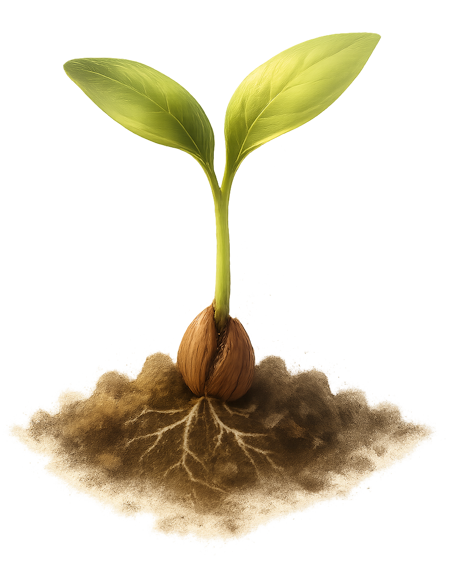
Roots do not apologise for taking their place in the soil.
Neither should you.
What would it feel like to let your no root as deeply?
Tyra, from the Realm of Ardenor
Reflecting on Your Own Path
The power of saying no is not only about drawing a line; it is also about shaping a space. Each no you speak clears a little ground where your own voice can breathe. Without it, life becomes crowded with the weight of what others ask, expect, or assume. With it, a doorway opens back toward yourself.
Think for a moment about the last time you wanted to say no but couldn’t. Maybe the word caught in your throat, maybe you smiled and agreed, maybe you convinced yourself it wasn’t worth the conflict. What did it cost you in energy, in rest, in clarity? These moments are not small — they are markers on your path, showing where you step outside your own home.
Now recall a time when you dared to say it. Perhaps your no sounded shaky, perhaps it felt uncomfortable. And yet afterwards, notice how your body shifted — the breath a little deeper, the shoulders a little lighter. These moments, too, are signposts. They show you the path inward, the ground where you belong.
It may help to see no not as a rejection but as a compass. Every no points somewhere: away from what drains you, toward what nourishes you. The question is not only what are you refusing? but also what are you protecting, valuing, or choosing instead?
Take a breath with that thought. Imagine your no carrying the quiet weight of roots sinking into the soil — steady, unashamed, belonging exactly where they are. What would it mean for you to let your no take root in this way?
This reflection is not a task to finish, but a seed to plant. Let it rest, let it grow, and return to it when the moment comes. Each time you do, the path home becomes a little clearer beneath your feet.
Coming Home through the Power of Saying No
The power of saying no is often feared, resisted, or misunderstood. Yet when you look closer, it carries a quiet strength — not the force of shutting doors, but the grace of opening space. Each time you choose no, you return a little more to yourself.
Boundaries are often seen as barriers, but in truth they are invitations. They mark the edges where you begin and the world continues, where your energy is held safe, where your rhythm is honored. Without them, life becomes crowded and confusing. With them, life takes shape. No becomes not a rejection but a design: the way you build a home within yourself.
Saying no will not always feel comfortable. Sometimes it will stir guilt, sometimes it will meet resistance. But like roots pressing into the soil, each repetition strengthens your ground. And the more familiar it becomes, the less it feels like conflict, and the more it feels like belonging.
Home is not a destination far away; it is the steady place within that you return to when you honor your own limits. Every no, however small, is a step across that threshold. And when you look back, you see how those steps form a path — not of rejection, but of return.
So the next time you feel the weight of yes pressing too heavily, pause. Remember that the power of saying no is not only about refusal. It is a way of coming home, again and again, until the ground beneath your feet feels truly yours.
Where the journey leads
A path unfolds before you
Beyond each step, the path opens further.
Continue your way and let it guide you home.